
Contact lifecycle actions: archive vs GDPR erase vs hard delete
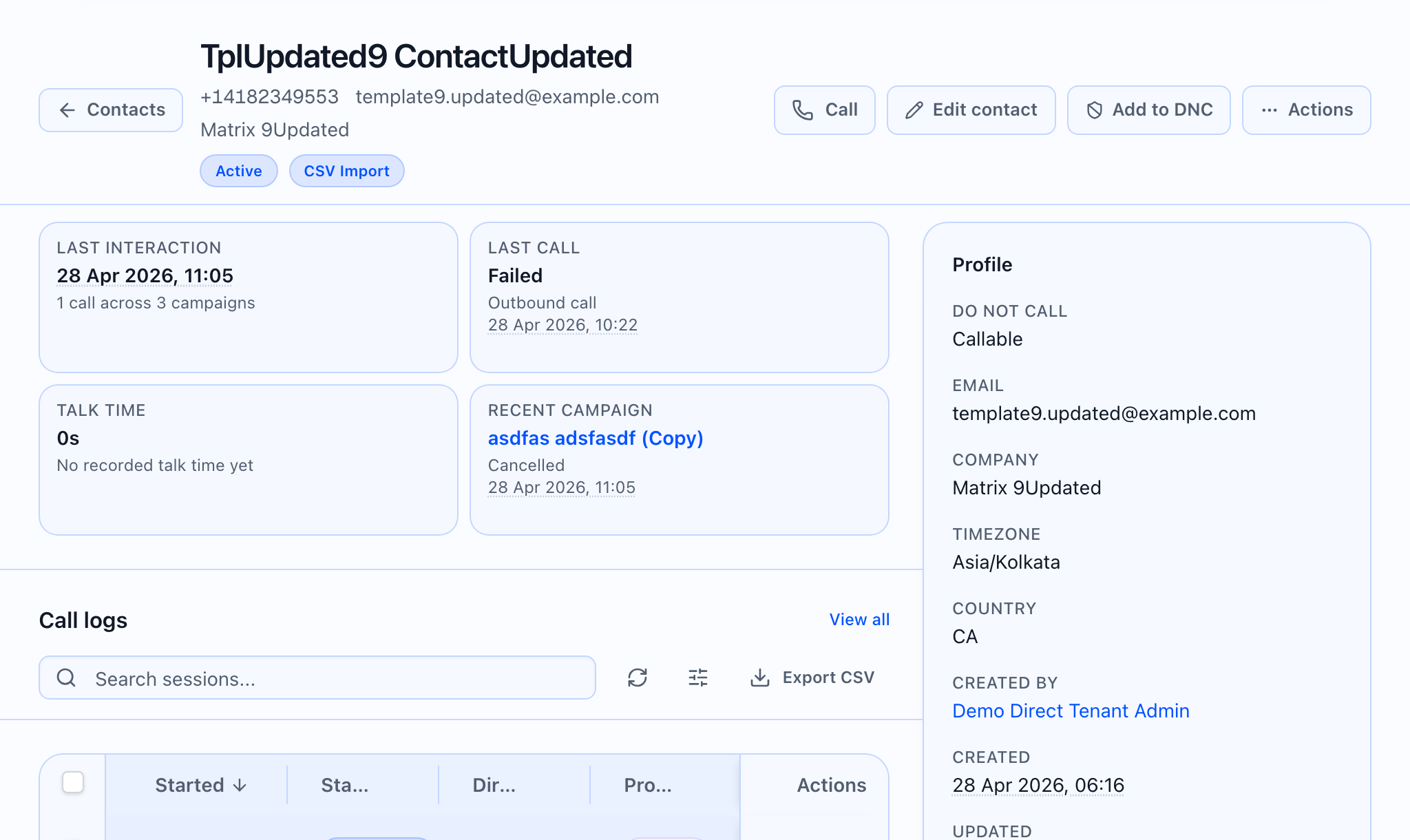
Plain-English guide to the Actions control on the contact detail header.
 ## Who sees each action
On the contact detail page, GDPR erase and Hard delete are available only when your role is superadmin, platform admin, or tenant admin and the contact allows that action (per contact permissions from the server). Archive contact appears when archiving is allowed for that contact; you do not need an admin role for archive.
If no menu items apply, the Actions control is hidden (unless an error message needs to show).
Archive contact
- Menu label: Archive contact
- Confirm title: Archive contact?
- Confirm description (summary): The contact is removed from active lists and segments; existing call logs and campaign history stay; future outbound attempts are blocked. The dialog also shows call and campaign counts from the contact.
- After success: The page reloads in place (you stay on the same screen until refresh completes).
GDPR erase
- Menu label: GDPR erase
- Confirm title: GDPR erase contact?
- Confirm description (summary): PII is redacted, the contact is marked deleted, and they are added to DNC; history stays but identifiable data is removed. Call and campaign counts are shown.
- After success: The page reloads in place.
Hard delete
- Menu label: Hard delete
- Confirm title: Permanently delete contact?
- Confirm description: States the contact is permanently removed because there is no campaign or call history, and that the action cannot be undone.
- After success: From the contact detail page, you are taken back to the main contacts list. In other contexts the page may only refresh.
Errors
Failed requests surface inline in a red-bordered box under the Actions control, using the error message from the server (including extra detail when the server provides it). While a request is in flight, Actions is disabled and shows a spinner.
Align with your compliance and ops policy before using archive, GDPR erase, or hard delete. The UI text is explicit about blocking future outbound calls and data handling.